Rat control in Den Bosch: how to recognise rats
The brown rat is bigger than many people expect and leaves clear traces. Often you notice the damage or the droppings first, and only later the animal itself.
- droppings of one to two centimetres, often in small groups along a regular route
- burrows by the shed, under patio slabs or next to the foundations
- dark, greasy smear marks along walls and beams
- gnawing damage to wooden doors, cables, pipes or bins
- bird food or chicken feed disappearing overnight
Scratching in a cavity wall or under the floor at night can also point to a rat.
Where are the rats coming from?
Broadly speaking, there are two sources. The first is the sewer. A cracked or sunken sewer pipe, an old connection that was never capped or a broken drain gives rats a direct route into the crawl space, the cellar or even the toilet.
The second source is above ground: food and shelter. Seed that falls from the bird feeder, an open compost heap, chicken feed and windfall fruit all attract rats, as do cluttered corners behind the shed. Water nearby makes a spot even more appealing. Our pest control across Den Bosch always starts by working out which of the two we are dealing with.
Our approach to rat control
We start with the route. Runs, burrows and droppings tell us where the rats travel. We check drains, inspection chambers and the crawl space for a link to the sewer. If everything points that way, we advise fitting a rat valve (rattenklep or rioolklep), which stops rats coming up from the sewer but lets the water flow away as normal. A camera inspection by a drainage specialist shows exactly where a pipe is broken.
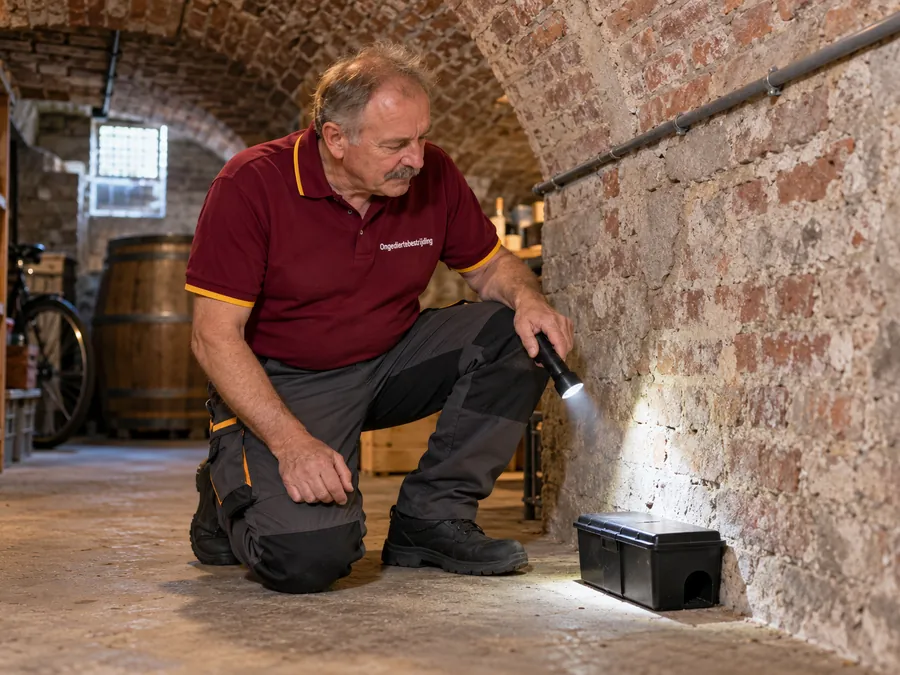
At the same time we deal with the rats already present, using locked bait stations or traps. Professional rodenticides may only be used by certified pest controllers, and we use them as precisely as possible. On a follow-up visit we check that the activity has stopped.
Why it pays not to wait
Rats gnaw through cables, insulation, plastic pipes and wooden doors, and chewed electrical wiring can cause a short circuit. They can also spread pathogens through their urine and droppings, such as the bacterium behind Weil's disease. And they breed fast: a few rats in spring can be a sizeable group by summer.
Seeing rats in a park, along a quay or by the bins on the street? Report it to the gemeente 's-Hertogenbosch, the municipality. On your own property, in your home or on business premises, we can help.
What you can do in the garden and shed
Remove the food. Feed birds from a bird table or a feeder with a catch tray rather than on the ground. Store chicken feed and pet food in a metal bin with a lid, use a closed compost bin and pick up fallen fruit. Cut back plants growing against the shed so rats have less cover.
Don't throw loose poison into a burrow and don't just fill a hole in: the rats will dig a new exit, sometimes towards your crawl space. Never touch dead rats with bare hands. Not sure whether it is rats or something smaller? Take a look at mouse control as well.